Cruel Summer?

In the Lakeway Area, as summer approaches, drought is a four-letter word.

Tennessee Valley Authority officials are holding out hope for a miracle, but at this point it would take rainfall of nearly Biblical proportions for Cherokee and Douglas lakes to reach their summer pool depth.

Ben Heath, operations support manager for the Tennessee Valley Authority, said drought conditions have the River Management team facing a challenge they haven’t seen since nearly 20 years ago.

“We’re out just trying to get the message out. What we’ve been experiencing is a pretty good drought,” he explained. “It’s about in line with 2007 or 2008 was the last time we’ve seen a drought like this.

“What’s that looking like from a numbers standpoint is rainfall, so far in 2026, we’re about 69% of normal in rainfall but runoff is really the story. Runoff is what makes it off the land and into the reservoirs and that’s only 44%.”

Any time rain falls, some of it is absorbed into the land, and consumed by vegetation. In times of drought that absorption is worse and less water makes it to the lakes.

That means, even a nice rainy day or two like happened last week isn’t enough to make up for the deficit.

Drought conditions began late in 2025 and have continued through 2026. Officials recognized the issue and collecting water more than a month earlier than normal, but the exceptionally dry spring has not allowed them to retain close to enough water.

“The bad thing is 60% of our runoff (typically) happens in the first part of the year, January, February and March and didn’t happen,” Heath said. “Now we are into May… it didn’t happen.”

Heath said the TVA is letting people know that the lakes are not as full as the public is used to and the reason for that is the lengthy drought.

“It’s not operations, it’s rainfall and runoff,” he said. “It’s the drought that’s driving this.”

All is not lost, however. “The lakes are open. They are useable,” he said. “But recreation is going to look a little different this year.”

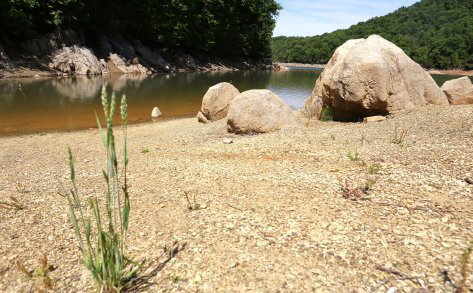
What’s that mean? It means that boaters, personal water crafter operators and anyone jumping or diving into murky waters will need to be more cautious because lower lake levels brings obstructions like debris, sunken trees and even the bottom of the lake closer to the surface.

“People need to be careful. Because there could be exposed hazards that normally have lots of water over the top of them,” he said.

Heath said Douglas Lake is down about 15 feet from summer pool – the point at which the lake is essentially full for the summer. Cherokee is roughly 11 feet from summer pool.

“Every reservoir is down this year and it all comes down to Mother Nature’s not been very kind to us,” he said. “It’s been 18-19 years since we’ve had a drought like this.”

Heath said part of the reason for the public outreach is that because it’s been so long since the last drought like this, many people aren’t aware that it’s possible that the lakes might not reach summer pool.

“A lot of people think we just open it up, just fill the lakes up… ultimately it takes rain and runoff.”

Heath said there’s not any larger lesson to be drawn from the drought, it is simply an outlier year.

“We’ve had many good years. We had very wet years the last couple of years,” he explained.