Building a Place to Belong

One Skater’s Effort to Bring a new Skatepark to Morristown

By Jessica Greene
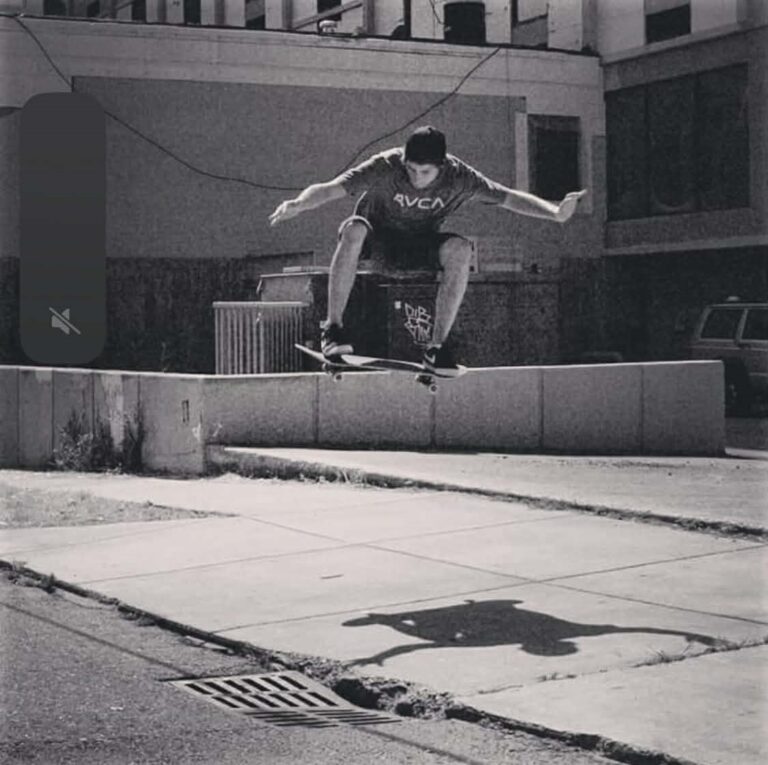
On most evenings, when the weather cooperates, you can still find Cameron Ruble on a skateboard.

Not watching.

Not coaching from a chair.

Just skating.
For Ruble, skateboarding has never been a phase or a hobby he outgrew. It has been a constant, and for the last six years it has also been a mission.

Morristown has long had a small beginner skate area at Frank Lorino Park, but Ruble knew from experience it was not enough. Local skaters were traveling to Bristol and beyond to find larger parks.
Others were practicing in parking lots, sidewalks, and spaces never designed for them.
What many adults see as kids lingering, he saw as a lack of a safe place to belong.
He began talking to parents, skaters, and eventually city leaders. Over time the conversations became research. He gathered information about park sizes, layouts, materials, and the companies that specialize in designing them. He studied how other cities approached the process and what worked once the parks were built.
“I realized a skatepark isn’t just concrete,” Ruble said. “It has to be designed for how people actually use it and how it holds up over time.”
That education process eventually led to collaboration with Parks and Recreation Director Travis Barbie and a city committee that included Councilmember Kay Senter, Emily Wood, Larry Clark, Andrew Ellart, and Marshall.

The group studied comparable communities such as Chattanooga and examined the impact larger skateparks had on both recreation and tourism.
Senter said the park fills a gap in local recreation.
“Skateboarding is an underserved sport,” she said. “It reaches a group that often does not participate in traditional organized athletics, and it includes all ages.”
Ruble has seen that firsthand through the spring skate clinics he organizes each year.
“The oldest participant I’ve had was 47,” he said. “There are a lot of assumptions about who skates, but it’s actually very broad. It teaches patience, discipline, and respect because you fall a lot and you learn from people around you.”
What city council recently approved was not a final design but the project itself and the use of land at the Talley Ward Recreation area. The vote allows the city to begin formal planning, gather public input, and seek bids from firms that specialize specifically in skatepark architecture and construction rather than general contractors.
Ruble said that distinction matters.
“These parks are different from typical builds,” he explained. “You need companies that understand flow, safety, drainage, and longevity. A well built park lasts for decades.”
The concept being discussed is a roughly 15,000 square foot concrete skatepark with supporting features such as restrooms, a water fountain, and a pavilion, while the beginner space at Frank Lorino Park would remain in place.


The final layout, however, will be shaped during the design phase with input from local users and Parks and Recreation.
Ruble believes a Morristown park would serve far more than the city itself, drawing riders from surrounding communities including Greeneville, Sevierville, and Kingsport. He points to the increased traffic seen at the city’s disc golf courses as an example of how outdoor recreation can quietly become a regional attraction.
More important to him, though, are the kids who live here.
“A skatepark gives them a safe and legal place to go,” he said. “Right now they’re skating where they can. This gives them somewhere they’re welcome.”
City leaders say the project will move through planning and design before returning to council for future approvals. Ruble, who has spent years gathering information and building relationships with designers and skaters across the region, said he is willing to continue helping however the city requests.
For him, the effort has never been about a ribbon cutting. It has been about a place.
“Once it’s there,” he said, “it belongs to the community.”

John Gullion
John Gullion
Articles: 58