ECD blasts governor after veto of 911 surcharge bill

The Hamblen County Emergency Communications District issued a scathing response over the weekend after Tennessee Gov. Bill Lee vetoed a bill that would have provided .36-cent increase to the state’s 9-1-1 surcharge rate on telephone bills.

“It is a sad day when someone in a leadership position undercuts a critical public safety component,” the statement said. “… and misleads the public while doing it.”

The bill would have increased the current surcharge rate – which had been in place since January 1, 2001 – from $1.50 to $1.86 resulting in a total annual increase per phone line of $4.32.

In its letter, the District outlined how the surcharge is used.

“… to aid 9-1-1 centers in keeping up with technological advancements that seem to change almost weekly… to improve outdated systems and components that are forced to run 24 hours a day… to implement the protocols that are the basic foundation of all emergency response in our jurisdictions… to ensure that the recruitment, training, and retention of highly skilled calltakers and dispatchers does not have lapses that could mean that difference between life and death,” the statement said. “And why do we need those things? Such improvements are needed because the public has an expectation that when they call 9-1-1 there should be processes in place that will aid in the faster apprehension of criminals, faster response to fires, better instructions to medics for lifesaving techniques, better resources when a child goes missing… and the list goes on and on.”

In vetoing the bill – which passed the Senate unanimously in amended form and the house by a significant margin – the governor referred to it incorrectly as a “tax increase.”

“We are disappointed that after seven (7) years in the governor’s office that Bill Lee doesn’t know the definition of a tax. A tax is administered broadly on a product or service and the revenue generated can be used for whatever purpose the government sees fit,” the statement read. “The 9-1-1 surcharge on telephones is just a surcharge, a user fee that can legally be used for only one purpose… the enhancement of the 9-1-1 system.”

Danny Houseright, Director of Morristown Hamblen EMS services, also expressed his frustration.

“From a public safety perspective, this decision creates a serious concern for the future stability of emergency communications. The proposed increase was minimal, but it would have played a critical role in maintaining and improving 911 systems, technology, and staffing. These are not optional services, they are essential to ensuring timely and effective emergency response,” Houseright wrote. “I fully agree that we must take a proactive approach in informing both the public and our local leaders. Many people are unaware of how 911 systems are funded or the growing demands placed on them. Without clear communication, the long-term impact of this decision may be overlooked. It is our responsibility to explain how this affects not only system upgrades, but also the ability to recruit, train, and retain qualified personnel.”

In its response to the governor, the ECD also criticized Lee’s characterization of the reserves in the Tennessee Emergency Communications Fund as substantial.

“The governor should know that the reserves of the TECB are there to upgrade and enhance statewide 9-1-1 networking and infrastructure. In fact, as the national leader in 9-1-1 technology, Tennessee currently has a multi-year contract out for bid that will bring the state’s Next Generation 9-1-1 Core Services to version 3.0, thus better connecting and aiding every 9-1-1 center in the state,” the statement read. “And as for the reserves of local 9-1-1 centers, those monies cannot be used for operational costs. They are earmarked for capital projects – such as new construction, radio system upgrades, and software acquisition – that can oftentimes run into the millions. Our 9-1-1 centers use these funds for those upgrades instead of returning to County Commissions and City Councils – which saves the taxpayers.”

While saying first responders and 911 dispatchers play a vital role in communities, Lee said that the Tennessee Advisory Commission on Intergovernmental Relations is studying the state’s emergency communication system this summer.

“We should wait for the results of that study before increasing the 911 surcharge rate even a penny,” the governor said.

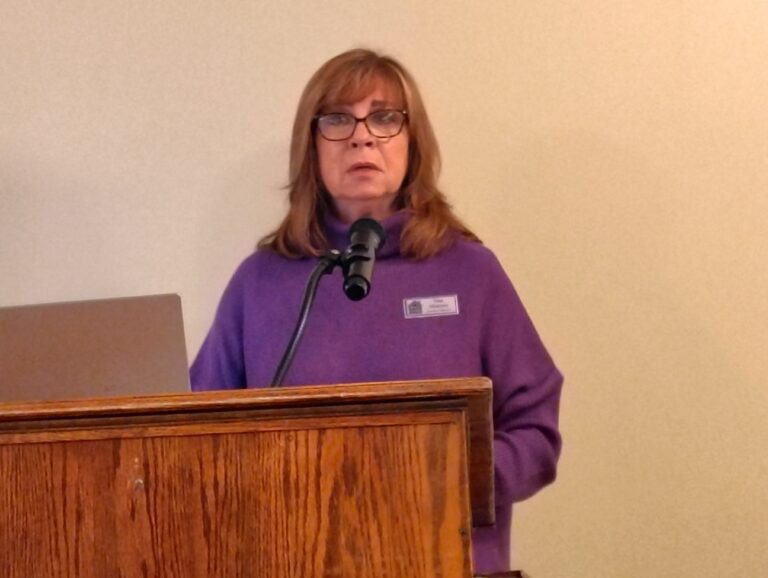
But the ECD – led by Executive Director Eric Carpenter – said it won’t be the first time such a study has been conducted and so far little positive has come from them.

“We welcome it. But here is what we know: this will be the third such study… and what comes of it will not be a quick fix or a magic formula. Every 9-1-1 center operates a little differently – and for good reason. That’s because every county / city/ community has different needs when it comes to public safety. Morristown is not Murfreesboro. Jefferson City is not Jackson. Newport is not Nashville,” the statement said. “But now, by vetoing SJR 48, even after both the House and Senate held multiple committee meetings and passed it overwhelmingly, the Governor has shifted this burden to local jurisdictions.

“No doubt this will create a significant and unavoidable strain on local budgets that the legislature tried to avoid. The community’s 9-1-1 system is truly the ‘first point of contact’ for all emergency response.

“When it comes right down to it, the basic elements of public safety are that: (1) you need someone to answer the call, (2) you need someone to send help, and (3) you need someone to go and deal with the issue. Your 9-1-1 system is the first two of those.”

Houseright said local communities can expect ramifications from the governor’s decision.

“Moving forward, our message needs to remain clear, professional, and focused on the facts. This decision will shift financial responsibility to the local level, placing additional strain on city and county budgets. Local officials must understand that sustaining a reliable 911 system requires consistent funding,” he said. “If that support is not provided at the state level, local governments will be forced to make difficult decisions that could impact the level of service our communities depend on.”

Carpenter, speaking for the ECD, put it succinctly.

“Hard decisions must follow. Counties and Cities must now show where their priorities rest,” the statement said. “We believe that government should exist to provide those things which the people cannot provide for themselves. The top of that list should always be the protection and safety of its citizens.”