October 25, 2026

Sponsored Content from Roto-Rooter
Protect Your Home’s Plumbing
Is Your Home’s Water Pressure Putting Your Plumbing at Risk?
A pressure-reducing valve can quietly protect your pipes, fixtures and appliances by keeping excessive incoming water pressure under control.
Free estimates available • Questions welcome
What a PRV Does
A pressure-reducing valve helps regulate the pressure entering your home before water reaches your fixtures and appliances.
What Does a Pressure-Reducing Valve Do?
Think of it as a gatekeeper for your plumbing system.
Municipal water pressure can vary by location, elevation and demand. In some areas, the pressure entering a home may be higher than what is ideal for the plumbing system.
A properly functioning pressure-reducing valve, often called a PRV or pressure regulator, lowers that incoming pressure and helps maintain a more consistent, manageable level throughout your home.
Why it matters: Instead of excessive pressure constantly pushing against pipes, faucets, toilets, water heaters and appliances, a PRV helps keep that force under control.
What Can Happen When Water Pressure Is Too High?
High pressure may feel great in the shower, but it can create unnecessary stress throughout your plumbing system.
💧
Leaks & Drips
Faucets, seals and connections can wear faster and begin leaking.
🚽
Running Toilets
Extra pressure can contribute to wear on toilet fill components and valves.
🔧
Pipe Stress
Joints, fittings and supply lines can experience unnecessary strain over time.
🧺
Appliance Wear
Dishwashers, washing machines and water heaters rely on steady water pressure.
🔊
Noisy Plumbing
Banging or rattling pipes can be a sign that your plumbing deserves attention.
📈
Water Waste
Higher pressure can mean more water flows through fixtures than necessary.
How Do I Know If My Home Has a PRV?
Not every home has one, and an older valve may no longer be regulating pressure correctly.

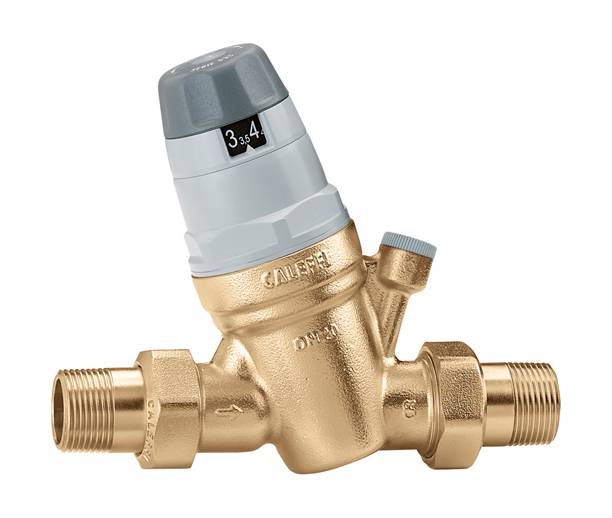
Placeholder image: Example of a residential pressure-reducing valve. Appearance and installation may vary.
What Does a PRV Look Like?
A residential PRV is commonly a brass fitting installed directly on the main water line. Many have a bell-, cone- or dome-shaped upper section with an adjustment mechanism on top.
Your valve may not look exactly like this one. Designs vary by manufacturer and installation, so if you are unsure, Roto-Rooter can help identify it and check whether it is regulating your home’s water pressure properly.
1
Find the main water line.
Look for where the main supply enters your home.
Look for where the main supply enters your home.
2
Check near the shutoff or meter.
A PRV is often located close to the home’s main shutoff or water meter.
A PRV is often located close to the home’s main shutoff or water meter.
3
Look for a bell- or dome-shaped valve.
It is typically a brass or metal fitting installed directly on the water line.
It is typically a brass or metal fitting installed directly on the water line.
4
When in doubt, have it checked.
A plumbing professional can test your water pressure and inspect the regulator.
A plumbing professional can test your water pressure and inspect the regulator.
Important: Having a pressure-reducing valve installed does not necessarily mean it is still working properly. Like other plumbing components, regulators can wear out with age.
What If My Home Doesn’t Have One?
Whether your home needs a PRV depends on the pressure being supplied to your property and the design and condition of your plumbing system.
If incoming pressure is too high and there is no properly functioning regulator, that pressure is transferred throughout your plumbing every day. Over time, the additional stress can contribute to leaks, worn fixtures and premature plumbing failures.
A simple pressure check can help you understand what is happening before a small problem becomes a costly one.
Signs It May Be Worth Checking
These symptoms do not always mean high water pressure, but they are good reasons to have your plumbing evaluated.
- Very strong or fluctuating water pressure
- Recurring faucet or fixture leaks
- Running toilets
- Banging or rattling pipes
- Repeated appliance hose or valve problems
Have Questions About Your Home’s Water Pressure?
Roto-Rooter can answer your questions, evaluate your plumbing system and help determine whether a pressure-reducing valve may be appropriate for your home.
Free Estimates
423-581-7336
Plumbers You’ve Trusted For Over 90 Years